


Are you ready to catch the big one?
Look no further than the Great Miami River and it's many tributaries! This picturesque river system stretches across 15 counties and includes more than 6,600 miles of rivers and streams. These waters are home to some of the best fishing in the state of Ohio. In particular, the Great Miami River is an ideal spot for catching smallmouth bass. The Stillwater River has pristine fish habitats. The Mad River is renowned as one of the only coldwater fisheries in Ohio and a prime spot for fly-fishing.
The rivers are home to an abundance of smallmouth bass, which are known for their strong fighting spirit and acrobatic leaps out of the water. These fish can grow up to 20 inches in length and weigh up to 6 pounds, providing a thrilling challenge for any angler.
To get started, you'll need a fishing license, which can be easily obtained online or at a local bait and tackle shop. Once you have your license, head to one of the many access points along the river, such as Island MetroPark in Dayton or Rentschler Forest MetroPark in Butler County. From there, you can wade into the river or launch a kayak or canoe to explore the different sections of the riverway.
But fishing isn't just about catching fish. It's also about enjoying the great outdoors and taking in the natural beauty of the river and its surroundings. Along the way, you may spot a variety of wildlife, including herons, beavers, and even bald eagles.
Techniques for catching smallmouth bass
When it comes to fishing for smallmouth bass, there are a few tried-and-true techniques to keep in mind. First, use light to medium-weight tackle, such as a spinning reel with 6-10 pound test line. Smallmouth bass are known for their quick and sudden strikes, so be sure to keep your line tight and your rod tip up.
In terms of bait, smallmouth bass are partial to live bait such as worms or minnows, as well as lures such as crankbaits or jigs. Try casting near rocky outcroppings or other structures, as smallmouth bass tend to congregate in these areas.
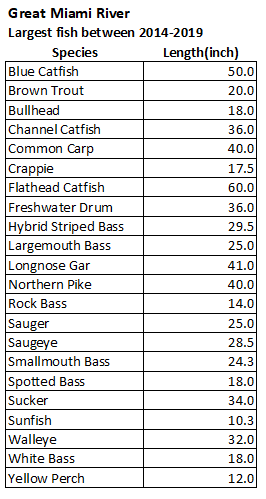
According to data collected by the Ohio Department of Natural Resources (ODNR), the Great Miami River:
To find a great fishing spot on the Great Miami River, use our interactive map and trip planner. There are locations where you can fish from the riverbank, kayak, or motorboat. There is access for every age and ability.
The Mad River offers one of the most distinctive fishing experiences in Ohio. It is one of the state’s only coldwater streams and is routinely stocked with brown trout by the Ohio Department of Natural Resources (ODNR). Consistent spring flow keeps the water cool, creating the conditions needed for trout to survive year-round — something rarely found elsewhere in the state.
Anglers come to the Mad River for fly-fishing, but the river supports more than just trout. In many stretches you’ll also find smallmouth bass, rock bass, and other cool-water species. Clear water and a mix of riffles, runs, and deeper pools make it a great place for both beginners and experienced anglers.
Coldwater habitat: Fed by groundwater springs that help maintain cooler temperatures.
Trout stocking: ODNR stocks brown trout annually, making this one of Ohio’s only reliable trout fisheries.
Accessible reaches: Well-known access points near Eastwood MetroPark, Urbana, Tremont City, and West Liberty offer options for wading or fishing from the bank.
Year-round opportunities: Cooler seasons are best for trout, while warm-weather months offer solid smallmouth action.
Light tackle or fly gear works well, especially in clear water. Focus on seams, deeper pools, and shaded banks where trout tend to hold. Many anglers choose catch-and-release practices to help maintain this limited, specialized fishery.
To find a great fishing spot on the Mad River, use our interactive map and trip planner. There are locations where you can fish from the riverbank, kayak, or motorboat. There is access for every age and ability.
The Stillwater River is widely recognized as one of the healthiest rivers in Ohio and is designated as a State Scenic River for its exceptional water quality and natural character. Clean, free-flowing water and intact habitat make it one of the best places in the region to catch smallmouth bass, rock bass, and channel catfish.
According to the Ohio Department of Natural Resources (ODNR), the Stillwater River consistently supports excellent fish diversity because of its natural riffles, deep pools, and steady, cool flow. Anglers appreciate the clear water, easy access, and miles of quiet rural scenery.
Exceptional habitat: Gravel riffles, woody cover, and natural banks support strong smallmouth populations.
Scenic River designation: Recognized by ODNR for outstanding water quality.
Reliable fishing: Smallmouth, rock bass, catfish, and sunfish are common throughout the system.
Easy access: Good entry points near Englewood MetroPark, Ludlow Falls, Covington, and Pleasant Hill.
Light spinning gear and small lures or live bait work well in clear water. Look for fish along current breaks, boulders, and drop-offs. Early summer through fall is typically the most productive time for smallmouth bass.
To find a great fishing spot on the Stillwater River, use our interactive map and trip planner. There are locations where you can fish from the riverbank, kayak, or motorboat. There is access for every age and ability.
Beyond the Great Miami, Mad, and Stillwater rivers, several smaller tributaries offer quality fishing opportunities for a range of species. These creeks and streams provide quiet places to explore and are ideal for wading, kayaking, or bank fishing.
Twin Creek is known for its clean water and natural stream habitat, supporting smallmouth bass, rock bass, suckers, and sunfish. Its mix of riffles and deep pools makes it a favorite for anglers who enjoy walk-in access and shallow-water fishing.
Wolf Creek offers easy access from parks and trail systems in Trotwood and Dayton. Anglers commonly catch smallmouth bass, rock bass, and channel catfish. After rains, flow increases can improve fishing for larger species moving upstream.
Greenville Creek, a tributary of the Stillwater, is also designated a State Scenic River. Its clean, cool water supports smallmouth bass, sunfish, and occasional saugeye, especially near its confluence with the Stillwater River.
When we take care of the land, the river takes care of us.

Related Content
River Conditions
River Water Bacteria Levels (Sensors are live from May 1 to Oct 31)
River Safety
Riverfront Parks
Fishing


