


Sometimes the Great Miami River gets all the attention — but the Mad River has a way of stealing hearts. With its groundwater-fed clarity, cold water, scenic wooded corridors, and nationally recognized recreation, the Mad River offers more than just clear water.
It’s a place where you can drift past forested banks, hear kingfishers chatter overhead, cast for trout in riffled water, or bike beside sparkling currents — all in the same day.
But what truly makes the Mad River special? More than most people realize.
The Mad River is one of Ohio’s only coldwater streams, and for good reason: it’s fed primarily by groundwater. Rain and snowmelt travel deep underground through layers of sand, gravel, and limestone. By the time the water resurfaces, the earth has cooled and filtered it to a steady 50–55°F year-round.
That cold, oxygen-rich water gives the Mad River:
Exceptional clarity
Ideal habitat for trout
Stable conditions for paddling and wildlife
It’s one of the few rivers in Ohio where brown trout and rainbow trout thrive, making it a destination for anglers far beyond our region.
The Mad River is part of Ohio’s first National Water Trail system, and for good reason — it offers recreation for every level of adventure:
60+ miles of flatwater perfect for beginner and intermediate paddlers
Four whitewater features on the Buck Creek for advanced paddlers
Calm, scenic paddling through Eastwood MetroPark and into downtown Dayton
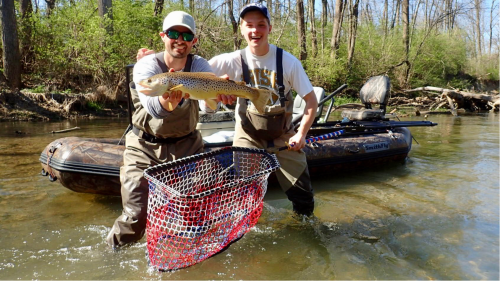
One of Ohio’s only trout fisheries
Clean, cold habitat for an abundance of fish and aquatic life
Iconic fly-fishing spots that feel like you’ve stepped into a mountain stream
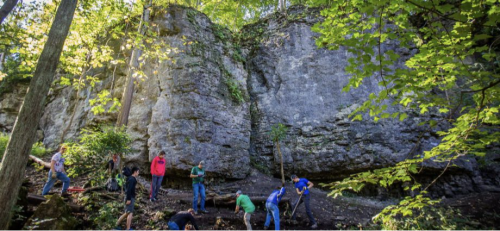
The Mad River Gorge offers some of the best outdoor rock climbing in the Midwest
Cliffs, bluffs, and challenging routes with the river flowing below
Bike, walk, or run for miles along the water
Incredible birding — herons, eagles, and kingfishers thrive here
Shaded banks for picnics, nature photography, and quiet escapes
It’s no wonder people fall in love with the Mad River — here, outdoor recreation is woven into every bend.
As the Mad River flows toward Dayton, it meets Huffman Dam, one of the Miami Conservancy District’s historic dry dams built after the devastating 1913 flood. This dam doesn’t hold water day-to-day — it stands ready to safely store floodwater only during heavy rain events.
Most of the year, the Mad River flows freely through the dam, keeping its natural rhythm and coldwater character. Huffman Dam’s presence means:
Communities downstream stay safe
Recreation stays open
The river’s ecosystem stays connected
It’s a powerful example of how smart engineering and natural systems work together.
Downstream from the dam, Huffman MetroPark offers some of the finest river access in the region. Visitors can:
Paddle calm, clear water
Fish from banks and riffles
Walk or cycle scenic trails
Watch wildlife in a peaceful, wooded setting
It’s often the place where people fall in love with the Mad River for the first time — standing at the water’s edge, watching trout rise, or launching a kayak into clean, cold water.
The Mad River is part of the Great Miami River Watershed National Water Trail, the first nationally designated water trail in Ohio.
That designation recognizes:
High-quality public access
Exceptional recreation opportunities
Cultural and natural significance
Strong regional stewardship
It puts the Mad River on the national map, telling paddlers and visitors across the country: This is a river worth exploring.
The Mad River is in good condition, with strong fish and macroinvertebrate communities and high-quality habitat. Like most rivers, it experiences spikes in bacteria after heavy rain — a natural response to runoff — but levels typically decline quickly. Paddling and rowing remain low-risk activities for most people, especially during dry weather.
The Miami Conservancy District and partners work every day to keep the Mad River healthy by:
Monitoring nutrients, bacteria, and pollutants
Supporting green infrastructure and stormwater improvements
Helping schools raise and release trout
Hosting river cleanups
Educating communities and homeowners
When we take care of the land, the river takes care of us.

Related Content
River Conditions
River Water Bacteria Levels (Sensors are live from May 1 to Oct 31)
River Safety
Riverfront Parks
Fishing


