As Ohio celebrates America 250, the story of innovation is not just about invention — it’s about systems.
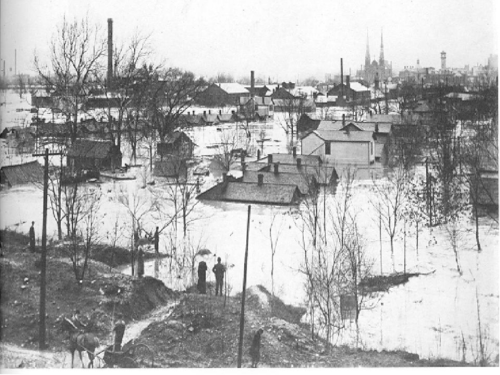
In the wake of the devastating Great Flood of 1913, communities across Southwest Ohio faced a critical decision: rebuild the same way and risk repeating history — or design something fundamentally different.
They chose different.
The result was not simply a set of dams. It was the nation’s first fully integrated regional flood protection system.
That decision defines the Miami Valley today.
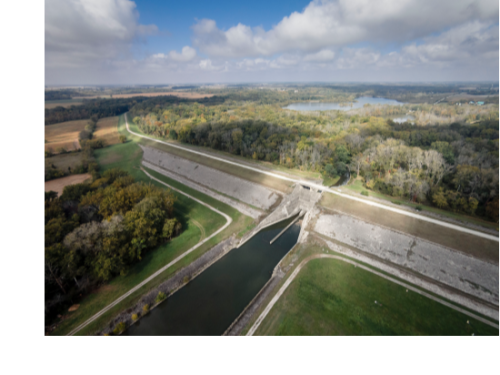
While many people associate the Miami Conservancy District with its five large dry dams, the true breakthrough was not any single structure.
It was integration.
For the first time in U.S. history, flood protection was designed as: One Unified System
Rather than isolated local projects, engineers designed infrastructure to function together across the entire Great Miami River Watershed.
The system includes:
All designed concurrently — not piecemeal — and built to operate as a coordinated network.

Before 1913, flood control was typically:
After 1913, Southwest Ohio implemented something different:
· Flood risk was treated as a watershed problem.
· Infrastructure was engineered for system performance.
· Funding reflected shared regional benefit.
· Governance crossed municipal boundaries.
That framework became a model for modern watershed authorities across the country.
The technical design was important — but the governance structure made it sustainable.
The Miami Conservancy District was created to manage infrastructure across political boundaries, ensuring coordination at the scale water actually moves.
Property owners who benefited from reduced flood risk contributed through assessments tied to measurable protection.
That funding model:
For more than 100 years, that financial structure has supported continuous operation and dam safety improvements.
The system was designed to handle a flood larger than 1913 by approximately 40%, demonstrating early adoption of forward-looking engineering.
Today it continues to adapt through:
The core concept remains intact because it was built as a system — not a temporary fix.
As Ohio reflects on 250 years of American progress, the Miami Valley’s flood protection system stands as a powerful example of industrial-era innovation rooted in collaboration.
It represents:
It also demonstrates something timeless: When communities align around shared risk and shared responsibility, they can build infrastructure that endures for generations.
The lesson from 1913 is still relevant today.
Innovation is strongest when it connects engineering, governance, and funding into one integrated system.
And that system continues protecting Southwest Ohio — more than a century later.